Showing posts with label products. Show all posts

Thursday, December 18, 2014

Zactran® Eliminates Footrot

Gamithromycin (Zactran®) is macrolide antibiotic licensed for cattle in the treatment and control of bovine respiratory disease. It is not approved for sheep (or goats); however, it may be prescribed by a veterinary for extra-label use.

Foot rot is caused by the anaerobic bacterium Dichelobacter nodosus. D. nodosus does not survive for long in the environment, so the main reservoir of infection is in the animals. In theory, foot rot can be eliminated from a flock, through a combination of vaccination and/or antibacterial treatment (parenteral or topical) and/or culling of infected animals, coupled with good biosecurity.

In a German flock with a high prevalence of foot rot, 184 sheep were given the standard dose of Zactran® (6 mg/kg). The injection was given subcutaneously in the axilla. On day 23, 19 sheep were re-treated with Zactran®. On day 45, no lame sheep or positive lesion scores were observed.

In a Danish study, 48 flocks comprising around 9000 sheep were given the standard dose of Zactran®, subcutaneously on the side of the neck. Of the 48 participating flocks, 44 remained free of foot rot and D. nodosus more than one year later

The results from both studies showed that whole-flock, systemic antibiotic treatment can eliminate foot rot and D.  nodosus. In the Danish study, a single treatment with gamithromycin was sufficient. In the German flock, two treatments at an interval of 22 days were required to eliminate foot rot in some sheep.

Source:  Short Communication, Veterinary Record, January 2014

Wednesday, October 1, 2014

What About New Dewormers?

Why does it take so long for new dewormers to become available on the market for small ruminants?  Some producers may be wondering: when are the drug companies going to bring out some new dewormers (anthelmintics)?  What is the problem?  Why are we having to rely on “old” drugs that, in many cases, are no longer working as they should?

To learn more, read the latest Timely Topic from the American Consortium for Small Ruminant Parasite Control. It is written by Dr. Adriano Vatta, a veterinarian from Zoetis. Dr. Vatta was involved with the initial testing of the FAMACHA© system (in South Africa).

Read full article

Wednesday, March 12, 2014

New Product: Electric Hoof Knife

The Electric Hoof Knife is the newest and most innovative tool available for trimming goat and sheep hooves. Designed to improve hoof health and make trimming hassle-free, the Electric Hoof Knife is a power tool that buffs instead of cuts to remove hoof material.

After eight years of development, the Electric Hoof Knife now has a disc created specifically for trimming goat and sheep hooves. This lightweight tool is easy to maneuver and can trim tough and overgrown hooves with little effort on part of the user. People who have limited access to electrical power can easily run the Electric Hoof Knife off of a generator or an automobile’s DC/AC power converter, so the tool is accessible anywhere, anytime.

The Electric Hoof Knife Goat & Sheep set, which retails for $254.95, comes with the Electric Hoof Knife power unit, two Goat & Sheep Trimming discs, a pair of safety glasses, and a carrying case.

For more information, or to watch videos of the Electric Hoof Knife in action, visit www.ElectricHoofKnife.com or call (877) 320-8203.

Saturday, May 4, 2013

A Blood Test to Determine Pregnancy

In their recently published 2013 Sheep Research Report, North Dakota State University reported on a study whereby they evaluated the effectiveness of the BioPRYN blood test to detect early pregnancy and pregnancy rates in sheep.

Is she or isn't she?
The BioPRYN test can be used to determine pregnancy status in cattle, bison, goats, sheep, deer, elk, and other ruminants. It measures the presence of Pregnancy-Specific Protein B (PSPB), a protein only produced by the placenta of a growing fetus, in the blood circulation of the female.

In the North Dakota study, pregnancy was detected as early as 20 days in one ewe; however, 72 percent of the ewes were falsely determined to be open when the test was conducted before 25 days of pregnancy. Testing between 25 and 30 days accurately determined pregnancy in 83 percent of pregnancies. Testing after 30 days of pregnancy accurately identified 98 percent of pregnant ewes.

Breed and age of pregnancy were strongly correlated with PSPB concentrations. Concentrations of PSPB were not correlated with litter size in the Katahdin and Hampshire breeds. Thus, the test could not be used to determine pregnancy rates in ewes of these breeds.

Concentrations of PSPB were strongly correlated with litter size in the Columbia and Dorset breeds. Thus, PSPB concentrations could be used to sort Columbia and Dorset ewes into pregnancy groups. However, the exact date of breeding would need to be known.

The BioPRYN (PRYN stands for "Pregnant Ruminant Yes No) test is commercially available from BioTracking, LLC. The test costs approximately $6.50, plus the cost of the sample tube and needle

The alternative to blood testing for pregnancy is ultrasound scanning, which requires expensive equipment and a highly trained technician. In some states, only licensed veterinarians may provide the service.

Source: Efficacy of pregnancy specific protein B assay to predict pregnancy and pregnancy rate in sheep, 2013 Sheep Research Report. North Dakota State University.

Thursday, July 5, 2012

Levamisole is back!

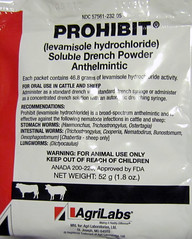
Prohibit™ soluble drench (levamisole) is again being manufactured (by Agri-Labs) and is back on the market. Check with suppliers to determine availability. Prohibit™ had been on prolonged back order (twice before), as Agri-Labs awaited FDA approval.

The availability of levamsiole is welcomed news for the sheep and goat industry, as levamisole is often the most effective anthelmintic, especially in flocks and herds that have high levels of resistance to the other drug families (benzimidazoles and macrocylic lactones, especially avermectins).

Levamisole is FDA-approved for use in sheep, whereas its use in goats must meet the requirements of the extra-label drug law. Compared to other anthelmintics, levamisole has a narrower margin of safety, thus it is imperative that the drug be administered (orally) according to an accurate weight.

Levamisole is from the class of anthelmintics called nicotinic agonists. Nicotinic agonists include two groups of anti-parasitic drugs:  tetrahydropyrimidines (TETR) and imadazothiaoles (IMID). The TETR group includes pyrantel (Strongid®) and morantel (Rumatel®), which are only effective against adult worms.

Levamisole is a member of the IMID group. It is effective against adult and larval stages of stomach, intestinal, and lung worms. There is conflicting evidence as to whether it is effective against arrested or "hypobiotic" larvae.  Levamisole has no efficacy against tapeworms or liver flukes.

As with all anthelmintics, levamisole should be used judiciously to preserve its long-term effectiveness. Selective deworming of animals showing clinical signs of parasitism (FAMACHA© scores of 3, 4, or 5) is advised. It is not recommended that all animals in a flock or herd be dewormed or that animals be moved to a clean pasture after dosing.

Prohibit® product label @ FDA

Monday, May 14, 2012

DNA Test for OPP

The U.S. Meat Animal Research Center (USMARC) in Clay Center, Nebraska, has discovered a gene (TMEM154) that affects susceptibility to OPP infection. There are three major variants of the gene, called haplotypes 1, 2, and 3.  In more than 8000 sheep tested, 97 percent had some combination of these three haplotypes.

Haplotypes 2 and 3 were strongly associated with OPP infection and considered to be "susceptibility alleles." One copy of the haplotype 2 or 3  was needed to increase susceptibility to OPP infection.

In contrast to ewes with one copy of haplotype 2 or 3, those with two copies of haplotype 1  were many times less likely to be infected.  The findings were confirmed with the help of scientists at the Animal Disease Research Unit in Pullman, WA, and the U.S. Sheep Experiment Station in Dubois, ID.

In collaboration with GeneSeek©, USMARC is developing a TMEM154 genotyping test for commercial use. The aim of the test is to correctly determine the TMEM154 haplotypes for each animal tested.  The test is expected to be available  to producers in May 2012. As research continues, genetic guidelines  for reducing the incidence of OPP infection will evolve.

OPP-infected ewes are 20% less productive (USMARC).

Ovine progressive pneumonia (OPP)  causes an incurable, slow-acting, wasting disease that affects millions of sheep worldwide. The disease affects multiple tissues, including those of the respiratory and central nervous system.

In North America, OPP is one of the most costly diseases affecting sheep due to decreased productivity, "hard bag", lameness, and early culling of ewes. Once infected, sheep are carriers throughout life. 

Source:  Research on genetic susceptibility to ovine progressive pneumonia at the USDA Meat Animal Research Center (USMARC), Clay Center, Nebraska

Editor's note:  CAE (caprine arthritic encephalitis) is a similar lentivirus that affects goats. Cross infection is possible.

Monday, February 20, 2012

How coccidiostats work

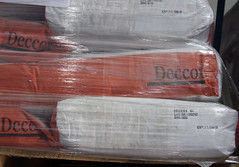
In the U.S., three anticoccidial agents are FDA-approved for use in sheep and/or goats:  Bovatec, Rumensin, and Deccox.  Bovatec is approved for use in sheep in confinement. Rumensin is approved for use in confined goats.  Deccox is approved for young, non-lactating sheep and goats.

Deccox (decoquinate) is a coccidiostat that stops the growth of coccidia, but does not kill coccidia. It works by inhibiting the activity of the cell's mitochrondria, interfering with energy production in the cell. Deccox acts at five developmental stages of coccidia, and provides the widest range of action of all the anticoccidial agents.

Bovatec (lasalocid) is a coccidiocide that kills coccidia. It is an ionophore that moves potassium, sodium, calcium, and magnesium into the cell, causing the cell to burst. Bovatec works primarily on a single developmental stage of coccidia, providing a narrower range of action than Deccox.

Like Bovatec, Rumensin (monensin) is an ionophore and effective anticoccidial agent. Though their modes of action differ, similar levels of coccidia control have been achieved with Bovatec and Deccox in research studies.

Source: Deccox vs. Bovatec, Merrick's

Monday, November 7, 2011

New source for McMaster Slides

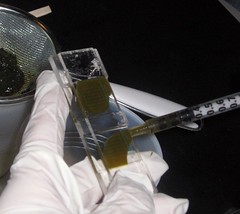
McMaster slide
There is a new source for McMaster slides.  It is FEC Sources.  The slides can be ordered online from their web site at fecsource.com.

A McMaster slide is a two or three-chambered slide that is used to count worm eggs.  Fecal egg counting is a quantitative method of determining anthelmintic (dewormer) resistance and pasture contamination.

Other sources of McMaster slides include the Chalex Corporation (www.vetslides.com) and Focal Point (www.mcmaster.co.za).

Sunday, May 1, 2011

Tour of sheep dairy

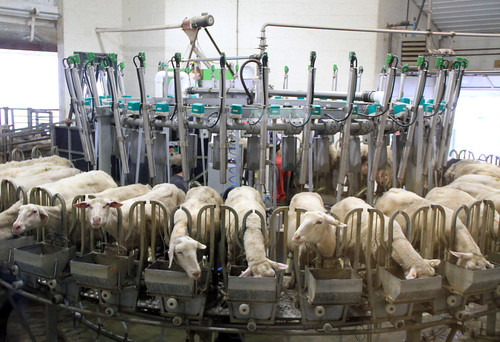
Forty-six people boarded a bus in Taneytown, Maryland, on April 27, 2011, en route to Valley Shepherd Creamery in Long Valley, New Jersey. Valley Shepherd milks approximately 600 ewes and has the only carousel (rotating) milking parlor (for sheep) in the United States.

Click to view video at Flickr

Valley Shepherd makes a variety of delicious cheeses and other products from sheep, goat, and cow milk. Their farm is located only 40 miles from New York City, where they market much of their product via farmer's markets and other retail establishments. Product may also be purchased online.

Valley Shepherd Creamery is open to the public for tours. Their Sheep Shoppe merchandises their dairy products and many other unique items pertaining to sheep. The farm hosts an annual Shearing Festival.

Valley Shepherd Creamery

Special thanks is extended to Teresa Ridinger for organizing the tour of Valley Shepherd Creamery.

Monday, April 11, 2011

Wool added to body armor

Researchers at the Royal Melbourne Institute of Technology (RMIT) school of fashion and textiles discovered that a blend of wool and Kevlar, the synthetic fiber widely used in body armor, was lighter and cheaper and worked better in some conditions than Kevlar alone.

The RMIT textile technologist, Rajiv Padhye, Ph.D., said the standard bullet proof vest was generally made of Kevlar, a dense, strong and expensive fiber. For military use, a heavy ceramic plate provides greater protection over vital areas.

A Kevlar vest typically comprises some 36 layers of Kevlar fabric; however, it loses about 20 percent of its effectiveness when wet, requiring an expensive waterproofing process.

"What we did was kept the Kevlar but added a wool yarn into this," he said. The increased friction of the wool in a tight weave means a vest comprising 28-30 layers of fabric provides the same level of bullet resistance as 36 layers of Kevlar.

"Because wool fibers expand naturally in water by up to 16 percent, the wool-Kevlar blend actually becomes more effective in wet conditions," he said. "The result is a cheaper bullet-resistant vest that works even better when it's wet."

That's a significant matter, considering Kevlar costs about $70 a kilogram compared with about $12 a kilogram for wool.

Source:  ASI Weekly, 4.08.11
(reprinted in part from Australian Associated Press)

Wednesday, November 10, 2010

Two new sheep drenches in the pipeline

Until last year, the last new anthelmintic (dewormer) class that was introduced to the market was macrocylic lactones (i.e. Ivomec) by Merck in 1981. But since last year, two new sheep drenches have entered the pipeline:  Zolvix® and Startect®.

Zolvix® (monepantel) was released by Novartis last fall in New Zealand. It is now available to producers in Australia, Europe, and South America. Startect® (derquantel + abamectin) was recently released by Pfizer. Currently, it is available only in New Zealand.

Both new sheep drenches represent new anthelmintic classes. They have different modes of action than current anthelmintics. Consequently, they are effective against worms that are resistant to other classes and combinations of anthelmintics.

When (and if) these anthelmintics become available in the United States is anyone's best guess. It is often too expensive for the drug companies to get approvals for drugs that have limited market potential. 

Perhaps, the Minor Use/Minor Species Act will facilitate the approval of these two new drenches for U.S. producers. The purpose of the act is to find innovative ways to bring products for small populations to market and is designed to help pharmaceutical companies overcome the financial roadblocks they face in providing limited-demand animal drugs.

www.zolvix.com
www.startect.co.nz

Wednesday, November 3, 2010

"Licking" worms

The CARLA® Saliva Test has been developed by New Zealand AgResearch scientists as a powerful new tool for selecting sheep with greater immunity to internal parasites.

CARLA Saliva test
AgResearch image link
The test provides an accurate and simple way to select animals which suffer less from the effects of parasitic worms, and which pass fewer worm eggs onto pasture.

The test measures antibodies against worm larvae in sheep saliva: animals with high levels of antibodies are better at preventing worms establishing in the gut. This means the animals can put more of their energy into growth, without any increase in dags.

The CARLA® Saliva test is available ONLY to producers in New Zealand.

Watch YouTube video

Editor's note:  Before the test is released outside of New Zealand, the researchers plan to do some validation trials in other major sheep raising environments, including the U.S.  According to an e-mail, they will be entering into discussions with a Veterinary Diagnostic Company in the U.S. that may eventually offer the test to U.S. producers.

Tuesday, April 20, 2010

New colostrum product for baby goats

AgriLabs recently announced the launch of Colostrx® Multi Species for use in newborn and nursing kids. Colostrx® Multi Species is designed to meet the colostrum needs of kids, foals, lambs, fawns, puppies, alplacas, llamas, kittens, and calves.

Colostrx© brand is the longest-standing, most-trusted name in colostrum replacement and supplement products and is now available as Colostrx© Multi Species for use when:
  • Reliable, high quality colostrum is unavailable
  • Enough colostrum is not produced
  • Feeding a large kid
  • Kid is orphaned
  • Disease could be transmitted from doe to kid
  • Colostrum is contaminated
  • Kid needs additional globulin protein support
  • Stressful birth
  • Feeding a runt.
AgriLabs Inc. is an animal-health, sales and marketing organization with distribution throughout the United States.

Source:  AgriLabs Inc., 4/19/10.

Saturday, November 28, 2009

Featured product: lamb coats

Good Shepherd Lamb & Dog Coats are natural wool coats specially designed to help maintain the core body temperature of newborn, sick or frail lambs, goats, and crias and to keep cold doggies warm. They are designed by Linda O'Brien, a Southern Maryland shepherd.

image by Good Shepherd Lamb CoatsGood Shepherd Lamb Coats do not restrict movement and are fluid resistant. The chest piece covers the lamb's chest and insulates it from the damp and coldness of the ground and prevents chilling of the lamb. The coats are available in solid colors, with contrasting trim. Call for availability of colors.

Good Shepherd Lamb Coats are currently available in two sizes: small (6-10 lbs.) and medium (11-15 lbs). An extra small size will soon be available. Good Shepherd Lamb & Dog Coats are extremely durable and easily cleaned. They can be washed and dried in the home laundry.

Good Shepherd Lamb Coats

Special thanks to Linda for donating several coats as door prizes at the recent Lambing & Kididng School.

Tuesday, November 17, 2009

CIDRs approved for sheep

The Food and Drug Administration (FDA) recently announced the approval of the EAZI-Breed CIDR Sheep Insert (progesterone solid matrix) for induction of estrus in ewes (sheep) during seasonal anestrus. This progesterone Controlled Intravaginal Drug Release (CIDR) is a steroid hormone that allows out-of-season breeding in sheep.

CIDR (Pfizer image)The data to support this approval were gathered in collaboration with the National Research Support Project–7 (NRSP-7), a USDA program intended to support the approval of new animal drugs for minor species of agricultural importance.

“Members of the U.S. sheep industry have long cited this type of product as their top priority need,” said, Dr. Meg Oeller, Director, Center for Veterinary Medicine, Office of Minor Use and Minor Species Animal Drug Development.

EAZI-Breed CIDR Sheep Insert is manufactured by Pharmacia and Upjohn, a division of Pfizer, Inc., New York, NY.

Source: FDA Center for Veterinary Medicine News, 11.16.09

Read FOI FDA official approval

Wednesday, September 9, 2009

New product: Vetericyn™

Vetericyn Inc., a California-based animal healthcare company, has announced the launch of its new Vetericyn™ equine product, available in a 16-ounce trigger spray for horses.

VetericynVetericyn™ utilizes an FDA-cleared technology that has been used to successfully treat over one million human patients without a single serious adverse effect. Now, the innovative topical wound-care product is available to the animal healthcare market.

Vetericyn™ is the first non-toxic broad-spectrum antimicrobial on the market. The landscape-altering wound and infection control technology works naturally with the animal's immune system to kill bacteria (including staph and drug-resistant MRSA), viruses, fungi and spores without harming healthy tissue.

Read full article at Medical News Today

Thanks to Cindy Mason for suggesting this topic.

Monday, January 5, 2009

Is she or isn't she?

According to its web site, BioPRYN® is a non-invasive, quick-response, 97% accurate, embryo-safe, quality-assured pregnancy test for livestock: cattle, sheep,, elk, goats, bison, and deer.

For sheep and goats, the testing fee is $7.50. A 2 ml blood/1 ml serum sample is required. The blood should be collected in the red-top blood collection tube. The sample does not require refrigeration. For the test to be effective, goats must be at least 26 days pregnant; sheep, 22 days.

There are several labs around the country that perform the test. View the map to see where laboratories are located.

http://www.biotracking.com/

Thanks to Kelly Cole for suggesting this link.

Friday, November 14, 2008

Spirit of Humane

According to their web site, Spirit of Humane is committed to the development and commercial distribution of humane slaughter systems for small-scale operations. They market restraint equipment and aids for Halal, Kosher, and general hand slaughter.

restraint for religious slaugher (image by Spirit of Humane)Spirit of Humane are family farmers who raise sheep and goats in Northwest Wisconsin. They worked with animal welfare experts to develop a restraint system for the religious slaughter of livestock. The restraint system complies with Halal and Kosher standards and exceeds the requirements of the Humane Slaughter Act.

Spirit of Humane markets a suitable knife for humane sheep and goat slaughter and a mobile slaughter unit. The slaughter unit is built to USDA standards. It is designed for small-scale custom and low volume state and federally inspected facilities.

Partial funding of the Spirit of Humane process was provided by a North Central Region SARE Producer Grant, a Wisconsin Added Value Producer grant, and the Browse & Grass Farmer Association.

The Northeast Sheep & Goat Marketing Program was also instrumental in the development of these slaughter tools.

Download brochure of their products

Sunday, August 17, 2008

Use of Cydectin (moxidectin) in goats

It is recommended that the cattle injectable formulation of moxidectin (recently approved by FDA) be used in goats because moxidectin has a superior pharmacokinetic profile in goats when administered by subcutaneous injection as compared to when administered orally.

Cydectin Cattle Injection (image by Farmrite UK)This means that a much greater proportion of the drug administered remains in the body at high therapeutic levels, but is no more persistent over time. Therefore, worm resistance to moxidectin will develop more slowly if given by injection to goats. Because the drug reaches high therapeutic levels when injected, there is no need to double the dose.

So when administering moxidectin by subcutaneous injection, use the cattle dose which is on the label (0.09 mg/lb; 0.2 mg/kg; 21 day meat withdrawal ) This is the one exception with goats where a dewormer should be administered orally and where the regular label dose (not 2 times the dose) should be used.

However, it is still OK to administer moxidectin orally to goats (just not preferred). But if an individual has a personal preference to administer moxidectin orally to goats, then the sheep oral drench at a 2X dose (0.18 mg/lb; 0.4 mg/kg) should be given.

Source: Southern Consortium for Small Ruminant Parasite Control (SCSRPC) - wormx.org

**No formulation of moxidectin is FDA-approved for use in goats. If a animal drug is not used in accordance with its label, its use requires veterinary approval.

Thursday, March 13, 2008

Featured Product: Callicrate Bander™

The Callicrate Smart Bander™ was developed as a tool for low-stress, bloodless, user-friendly castration. It enables delayed castration, which offers many potential benefits to livestock and dairy producers: more management flexibility, better weight gains, and more time for the urethra to develop (to reduce incidence of urinary calculi).

The Bander uses a strong rubber cord inserted into a patented application device. The cord is stretched over the scrotum before being tightened by a ratchet mechanism and then locked firmly into position using a metal clip.

Dr. Temple Grandin, one of the nation's leading experts on humane animal handling, says, "banding is better than cutting for the bigger animals" and "the tightness of the band is essential to minimizing discomfort." The tension indicator on The Callicrate Bander™ assures proper tension.

In addition to castration, the Callicrate Smart Bander™ has been used to dock tails, remove horns and antlers, repair prolapses, and shut off blood supply (for operations). Though marketed primarily to cattle producers, it has been used by sheep and goat producers for many of the same purposes. It is suitable for livestock of any size.

For more information about the Callicrate Smart Bander™, visit their website at http://www.nobull.net/.

View the You-tube video to see how the Callicrate Bander™ works.

Thanks to Frank Allnutt for providing information on this product.