
Showing posts with label behavior. Show all posts

Tuesday, July 5, 2016

Comparison of Weaning Methods

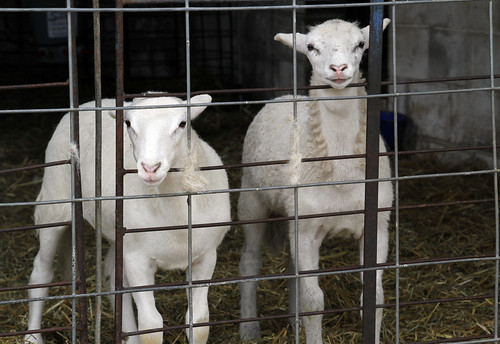
Researchers in Arkansas compared weaning methods to determine effects on performance and behavior of lambs. 168 crossbred Katahdin lambs were utilized in two experiments. Traditional weaning was characterized by complete separation of lambs from their dams, whereas fenceline weaning maintained fenceline contact. In contrast with calves, lamb performance and behavior did not differ among weaning methods.

There is no benefit to fenceline contact.

In two additional experiments, involving 190 Katahdin lambs, the time of day was added as a variable. The four treatment groups were 1) traditional-am; 2) traditional-pm; 3) fenceline-am; and 4) fenceline-pm. In these experiments, there were no beneficial effects of alternative weaning strategies. No performance differences were detected among treatment groups. The percentage of lambs vocalizing was greater among those with fenceline contact with their dams.

Source:  Sheep & Goat Research Journal
Friday, May 18, 2012

Teaching lambs to prevent bloat

Bloat can be a serious condition in ruminant livestock.  To simulate bloat, a Utah researcher inserted balloons into the rumens of cannulated lambs. When the lambs ate one food, the balloons were inflated to simulate bloat.  When they ate other food, the balloons were deflated to simulate relief.

What the lambs ate was monitored to see if they learned from their experiences. They did. They formed strong aversions to the foods associated with inflation of the balloon and gut distension. They formed a strong preference for the foods associated with deflation of the balloons.

The next step in the research is to determine if the lambs will form the same aversions and preferences under field conditions. For example, if given the choice, will they choose a mixture of birdsfoot trefoil and alfalfa (versus just alfalfa) to prevent bloat.

Source:  Utah State University

Thursday, July 9, 2009

Goat feeding behavior

Scandinavian researchers have been studying the feeding behavior of goats in loose housing. The results of their research can provide useful information to goat producers.

In a Swiss study, enriching pens with visual cover (partitions and lying niches) and elevated platforms was shown to positively affect feeding, resting, and agonistic behavior of goats.

Fence line feederIn pens with no enrichment, there were frequent social conflicts among goats due to their strict ranking relationships. These conflicts influenced feeding and resting time among low-ranking members of the group.

Many producers provide enrichment in pens and pastures. This research proves its merit from a production standpoint.

In another Swiss study, researchers determined that horned goats require more feeding space, whereas space requirements in the lying area do not differ between horned and hornless goats. On the other hand, the amount of time goats spend lying down decreases as the lying area is reduced in size.

In a study in Norway, it was shown that when feeding space was reduced for dairy goat does, silage intake was decreased by 16.2 percent. Hay consumption was not reduced by increasing the number of animals per feeding space; however, reduced feeding space decreased feeding time of some individual goats by 80 percent. The researchers concluded that more than one goat per feeding space is ill-advised.

Source: Journal of Applied Animal Behavior