Showing posts with label goats. Show all posts

Monday, November 13, 2017

Effect of anti-coccidial drugs in goats

Researchers at Texas A&M University compared the efficacy of two anti-coccidia drugs in goats. One hundred and fifty young goats, housed on concrete lots, were randomized to receive either amprolium (50 mg/kg once a day for 5 days by mouth) or ponazuril (10 mg/kg by mouth once) if they had fecal oocyst counts >5,000 per gram.

Both treatments resulted in decreased oocyst counts post-treatment compared to before treatment. There was no significant difference between fecal coccidia oocyst counts between goats in each group. There was no significant difference in body weight between goats in each group. This study showed that both amprolium and ponazuril were effective in decreasing fecal coccidia oocyst counts in this group of goats.

Use of both drugs is currently extra-label in the USA. Amprolium (Corid®) is labeled for treatment of coccidiosis in calves while ponazuril (Marquis®), a metabolite of toltrazuril, is labeled for treatment of equine protozoal myeloencephalitis.

Coccidiosis is an important disease of young goats (and lambs) leading to weight loss, diarrhea, and death. In the USA, both ionophores and decoquinate are labeled for prevention of coccidia in goats (and sheep). However, there are no drugs approved for treatment of clinical cases of coccidiosis in either species.

Source: Veterinary Parasitology, March 2016

Thursday, November 2, 2017

Impact of Selection and Breed on Resistance

by Ken Andries
Kentucky State University

For years producers have been told they need to utilize selective treatment and cull animals that require greater numbers of treatments.  Using the eye color score system (FAMACHA) we are able to select for resilience, but there is little evidence of the impact.

Boers had higher egg counts post-weaning
Kentucky State University started with a grade Boer herd in 2005 and added Spanish (2010) and Savanna (2011) breeds to evaluate breed differences under Kentucky’s environment.  The herds were selected for production and parasite resilience/resistance by culling any doe that did not bring a kid to weaning and number of dewormings a doe received during a 12 month period.

We moved the number of dewormings down over the years from 5 dewormings in 2008, to our current standard of culling any doe that is dewormed 3 times, or more, in a year. We started evaluating parasite loads in the kids at weaning and 60 days post weaning in 2016.

Read full article

Source:  American Consortium for Small Ruminant Parasite Control 

Thursday, August 31, 2017

First American Goat Federation Webinar

The American Goat Federation is hosting a webinar series in September 2017. The first webinar will be Tuesday, September 5, 7-8 p.m. EST. It will give a brief history and overview of the current state of the goat industry. The speaker is Dr. Reid Redden, Extension Sheep & Goat Specialist for Texas A&M AgriLife Extension Service.


To participate go to: http://purdue.webex.com/
When prompted for meeting number, enter 649 382 652
When prompted for password, enter Goat1

Additional webinars will be held on September 12, 19, and 26.

The American Goat Federation (AGF) was organized in 2010 to represent the interests of all organizations and producers engaged in the sustainable production and marketing of goat milk, meat, fiber, pack and grazing services across the United States. The goal of AGF is to unify, improve, and advance the American goat industry by providing input to agencies on public policy and research, and providing information and education to producers to achieve maximum success.

Wednesday, August 16, 2017

A New Era in Western Maryland

The Western Maryland Pasture-Based Meat Goat Performance Test was initiated at the University of Maryland’s Western Maryland Research & Education in Keedysville (Washington County) in 2006.

The purpose of the test was to evaluate the post-weaning performance of meat goat bucklings consuming a pasture-based diet, with natural exposure to internal parasites. Identifying bucks that were resistant and resilient to internal parasites was the trademark of the test.

The test was conducted for eleven years. Almost 800 bucks were evaluated. While the test was open to any breed or cross of goat, it gradually evolved into a “Kiko test.”  Over the span of the test, more than 100 producers from 20 states consigned bucks. Top-performing bucks were sold (as far away as California) or returned to farms for breeding.
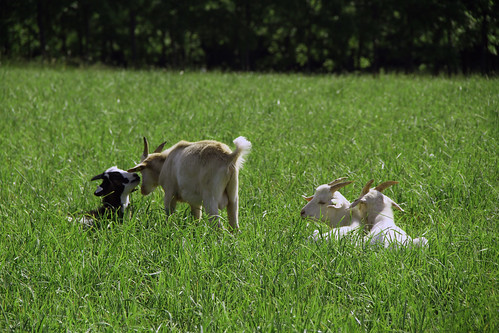
Bucks from the 2012 test
Over the years, many programs and activities were held in conjunction with the test, including field days, tours, sales, skillathons, and carcass evaluation. In 2014, the BluegrassPerformance Invitational in Frankfort, Kentucky, was established as a place to sell performance tested goats, including the top-performing bucks from the Maryland test. This year's sale is September 1-2, 2017.

Now, the goat test era is over (in  Maryland). Goat producers will be encouraged and assisted in their move to the next step in performance testing: within and across-herd EBVs. EBV stands for estimated breeding value and is a measure of genetic merit, The data is far more accurate than the data from buck tests.

A sheep research program will be initiated at the Western Maryland Research & Education next spring (2018). The pastures are being re-established and new infrastructure is being put in, as the hoop house that was installed several years ago was completely destroyed this past winter.

Internal parasites (GI worms) will likely continue to be the focus of the research program, as it is a logical follow-up to the goat test and parasites remain a major obstacle to profitable small ruminant production. We also plan to plant different forages for grazing.
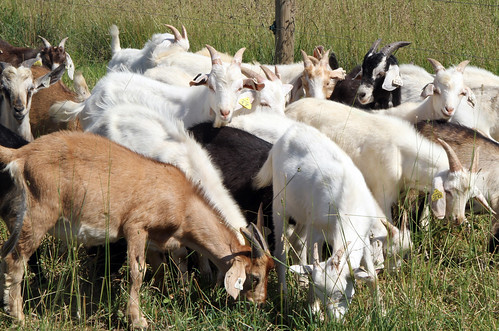
Bucks from the 2014 test
I’d like to express appreciation to my “Goat Team”: Jeff Semler, David Gordon, Pam Thomas, and Mary Beth Bennett. Others who played key roles include E. Nelson Escobar, Niki Whitley, Willie Lantz, Chris Anderson, Jeanne Deitz-Band, Lexie Simmons, and Amy Garza.

Dr. Dahlia O’Brien at Virginia State University (previously at Delaware State University) was instrumental to the success of the test, as she performed all the fecal egg analyses.

Thanks to the Maryland Grain Producers Utilization Board for providing funding for the pen vs. pasture studies.

Thanks to everyone who supported the goat test over the years, including all the consigners and buyers of bucks.

Susan Schoenian
Sheep & Goat Specialist
University of Maryland Extension

Tuesday, August 1, 2017

Goat Producers: Share Your Opinion

The USDA National Animal Health Monitoring System (NAHMS) is conducting needs-assessment surveys for its upcoming Goat 2019 study of the goat industry.  To help NAHMS craft the most informative study possible and obtain data that will be most beneficial to the goat industry.  The survey should take 10 minutes or less to complete.

NAHMS Goat 2019 Needs Assessment:
https://www.surveymonkey.com/r/NAHMSGoat2019


The survey asks what you consider to be the most important health issues facing the U.S. goat industry.  It also asks you to help identify the information that is needed regarding health-management practices used in the U.S. goat industry sectors.  The survey will be available through September 8, 2017.

The goat study will initiate data collection in 2019. This will be the second NAHMS study of the goat industry. The data from the study will be reported only in summary form; individual responses will be confidential.  Results from the preliminary survey linked above will help determine the priorities and objectives for the goat study.

Additional information about NAHMS, including reports from prior goat studies, is available at http://www.aphis.usda.gov/nahms

Monday, May 15, 2017

Worms Kill 87,000 goats in 2015

According to a recent USDA report, "Goat and Kid Predator and Nonpredator Death Loss inthe United States," about 500,000 adult and kid goats were lost to all causes (nonpredator and predator) in the United States (in 2015), which represented 9.8 percent of U.S. adult goat inventory and 19.4 percent of kids born in 2015.

Nonpredator causes accounted for about three-fourths of all adult goat and kid death losses in the United States in 2015. Undetermined causes (found dead or unknown) accounted for the highest number of nonpredator losses in both goats and kids. Of known losses due to nonpredator causes, internal parasites were the primary cause of loss, resulting in almost 87,000 goat and kid deaths in 2015.

Internal parasites accounted for 22.7 percent of all known death losses:  24.8% of goats, 15.6% of pre-weaned kids, 37.7% of post-weaned kids, and 21.5% of all kids. Some of the unknown (found dead) death losses may also have been the result of internal parasites.

Source: Goat and Kid Predator and Nonpredator Death Loss in the United States, 2015

Monday, January 9, 2017

Goat Kidding Record Keeping Software

Oklahoma State University has developed a goat record keeping program that helps producers keep track of goat kid births, weaning weights and adjusted weaning weights. These are the type of records that goat producers need to be maintaining in order to properly select those breeding does that are highly productive and profitable.


It is an Excel spreadsheet, so you'll need Excel to run it properly. Instructions on how to use the spreadsheet are included in the file. You can watch a recording of a webinar explaining on how to use this spreadsheet by clicking here.

Download Goat Record Keeping Software

Wednesday, October 19, 2016

Performance & Carcass Contest

A Performance & Carcass Contest was held in conjunction with the 2016 Western Maryland Pasture-Based Meat Goat Performance Test. Consigners who consigned bucks to the test were eligible to enter a goat in the contest. Fifteen goats were entered from ten states. All of the bucks were Kiko. There were 14 bucks and 1 wether.

Grand Champion Goat

After a 13-day adjustment period, the goats were fed for 87 days. They consumed a hay and grain diet. Hay was fed ad libitum. Grain was limit fed, about 1 pound per head per day. The goats were not fed for maximum gain. They were kept in a 16 ft. x 16 ft pen, with limited grazing. Shelter was provided via a 3-sided shed. Environmental enrichment was provided.

Eleven of the original goats were harvested to collect carcass data. The carcasses were deboned into portions of lean, fat, and bone.  Lean gain per day was the statistic used to rank the goats. It was determined by multiplying yield (lbs. lean ÷ live weight) by ADG (lbs. gain per day).

The Grand Champion goat was a Kiko buck entered by Angie Loos from Illinois. It easily won the competition, excelling in every performance and carcass category. The Reserve Champion was entered by Richard Gamby from Ohio. William Winingear & Brittany White from Missouri had the 3rd place goat. The 4th and 5th place goats were entered by John Smith (Virginia) and Patricia Larr (Indiana), respectively. The wether was the fattest goat in the competition. It did not place in the top 5.

Read full article about contest

Sunday, June 26, 2016

Looking For the Best Bucks

Ninety-seven (97) mostly Kiko bucks began the 2016 Western Maryland Pasture-Based Meat Goat Performance Test on June 23-24.  There were originally 142 goats nominated for the test, but nominations had to be reduced.

The goats were consigned by 34 goat breeders from 17 states.  Kentucky is the state with the most goats and consigners. Two Maryland breeders consigned 8 goats to the test.

Some of the bucks in the test

While on test, the goats will consume a pasture-based diet and be evaluated for growth, parasite resistance, parasite resilience, and carcass muscling. After a 13-day adjustment period, the test will span 84 days. Starting weights will be determined July 7-8. The goats will be handled bi-weekly for data collection.

A Performance & Carcass Contest is being held in conjunction with this year's test. Fifteen goats were entered into the contest. The contest goats will consume a hay-grain diet, with a goal of moderate gain. At the end of the feeding period, they will be harvested to collected carcass data.

To follow the progress of this year's test and contest, visit the blog at http://mdgoattest.blogspot.com.

It is the 11th year of the test and the 1st year of the contest. Both are sponsored by the University of Maryland Extension Small Ruminant Program and held at the University of Maryland's Western Maryland Research & Education Center in Keedysville.

Wednesday, March 23, 2016

Nominate Goats to Maryland Test

Nomination packets for the 2016 Western Maryland Pasture-Based Meat Goat Performance Test will be mailed in early April. Packets will be mailed to 2014 and 2015 consignors. Packets can be mailed to anyone else, upon request. To request a nomination packet, contact Pam Thomas at pthomas@umd.edu or (301) 432-2767 x315.

The test is open to goat breeders from any state. A producer may consign up to five male goats to the test. Goats may be of any breed or breed cross, with or without registration papers or eligibility. They must have been born between January 1 and March 15 of this year, and weigh between 40 and 70 lbs. upon delivery to the test site on June 24. After a 13-day adjustment period, the test will span 84 days, from July 7 to September 29.While on test, the goats will be evaluated for growth, parasite resistance, and parasite resilience. At the conclusion of the test, the top 10 bucks will be recognized.

This year's test will also include a performance and carcass contest. Anyone who consigns at least one goat is eligible to enter a goat in the carcass contest. Those who consign five goats to the test and have a goat in the carcass contest will receive a discount of $20 per test goat. There is no cost to enter the carcass contest. The age, weight, and health requirements for the contest goats is the same as the test goats.

http://mdgoattest.blogspot.com

Thursday, February 4, 2016

2016 Goat Performance & Carcass Contest

The 2016 Western Maryland Pasture-Based Meat Goat Performance Test will feature a Goat Performance & Carcass Contest. The purpose of the contest is to collect performance and carcass data from meat goats fed a moderate energy diet and to recognize producers whose goats excel in performance and carcass merit.

Jeff Semler
The contest is open to all consignors. Consignors must have a least one goat in the test in order to enter a goat in the contest. Contest goats must have a litter mate or half-sib in the test. There is no cost to enter. The test will cover the cost of feed, health care, slaughter, and data collection. A minimum of 10 goats and a maximum of 15 is needed to hold the contest.

The criteria for contest goats is the same as test goats. The contest goats will be housed in a zero-grazing pen with ample room for exercise and social interaction. They will be fed hay and grain: approximately 2 lbs. per head per day of a mixed alfalfa-grass hay and 1 lb. per head per day day of whole barley. They will be harvested to collect carcass data.

Goat Performance & Carcass Contest Procedures

Tuesday, January 19, 2016

Recap of 2015 Buck Test

2015 was the 10th year of the Western Maryland Pasture-Based Meat Goat Performance Test, which is conducted at the University of Maryland's Western Maryland Research & Education Center in Keedysville. The purpose of the test is to evaluate the post-weaning performance of meat goat bucklings consuming a pasture-based diet, with natural exposure to internal parasites, primarily the barber pole worm.

Kiko buck grazing clover
Eighty-four (84) mostly Kiko bucks were consigned to the 2015 test. They were consigned by 25 breeders from 12 states, including Delaware, Illinois, Indiana, Kansas, Kentucky, Maryland, North Carolina, Pennsylvania, Tennessee, Vermont, and Virginia.  Ten were first-time consignors.

The ten top-performing bucks were selected at the end of the test. The top-performing buck was a commercial Kiko consigned by Randy & Jodie Mazancsik from Kentucky. It was the second year in a row that they had the top-performing buck.  David Peters had two bucks in the top 10. He was named top consignor, an award given to the consignor with the three best bucks in the test. 

The 2015 Test was dedicated to the memory of long-time consignors Merritt "Sam" Burke from Delaware and Craig Adams from Illinois. Both men passed away in 2015. Each had consigned many top-performing bucks. In fact, Craig had one of the top-performing bucks in the 2015 test.

The progress reports and summary reports from the 2015 year's test can be downloaded from http://www.sheepandgoat.com/#!goattest/cbev. Reports from previous tests are available at the same site. 

Read Full Recap of 2015 Test 

Thursday, November 12, 2015

Dairy Goat Ration Evaluator

The Maryland Dairy Goat Ration Evaluator allows you to evaluate rations for dairy goats. The Excel spreadsheet determines if a dairy goat's requirements for energy (TDN), protein (CP), calcium (Ca), and phosphorus (P) are being met based on the amount and nutritional composition of feeds being fed.


The spreadsheet utilizes the latest nutritional requirements for dairy goats from the National Research Council (NRC, 2007).  Rations for dry, pregnant, and lactating does can be evaluated. There are separate requirements for does being parlor-milked. Rations can also be evaluated for doe, wether, and buck kids and mature bucks. The current spreadsheet utilizes pounds for measurements. A spreadsheet using metric measurements is in the works.

Download spreadsheets from Maryland Small Ruminant Page

Friday, September 25, 2015

Buy a Performance Tested Buck

Most of the bucks in this year's Western Maryland Pasture-Based Meat Goat Performance Test are for sale via private treaty. Some of the top-performers will be sold next year (as yearlings) at the Bluegrass Performance Invitational in Frankfort, Kentucky.

Top-performing buck as of day 70
After a 12-day adjustment period, the test began on June 26. The last data will be collected on October 2. While on test, the bucks are evaluated for growth (average daily gain), parasite resistance (fecal egg counts), and parasite resilience (FAMACHA© scores and need for deworming). Carcass muscling (rib eye area) is determined by ultrasound. The bucks are also evaluated for reproductive soundness (teats and testicles) and structural correctness (feet, legs, hooves, and teeth). The top-ten bucks will be identified after all of the data is received and analyzed.

Visit the Goat Test blog (or web page) to find a buck that meets your breeding goals. A list of consignors (with contact info) can be downloaded from the blog (right hand column) or web page.

http://mdgoattest.blogspot.com
http://www.sheepandgoat.com/#!goattest/cbev

Monday, June 29, 2015

84 Bucks Start Maryland Test

Eighty-four (84) meat goat bucklings started the 2015 Western Maryland Pasture-Based Meat Goat Performance Test on June 26. The test is conducted at the University of Maryland's Western Maryland Research & Education Center in Keedysville.

The purpose of the test is to evaluate the performance of meat goat bucklings consuming a pasture diet with natural exposure to internal parasites, primarily the barber pole worm. The top-ten bucks will be selected primarily on the basis of growth performance (ADG), parasite resistance (fecal egg counts) and parasite resilience (FAMACHA© scores and need for treatment).

A sample of this year's test bucks.
This year's test bucks were provided by twenty-four consignors from twelve states:  Alabama, Illinois, Indiana, Kansas, Kentucky, Maryland, New Jersey, North Carolina, Pennsylvania, Tennessee, Vermont, and Virginia. There are ten new consignors to this year's test. Fifteen consignors  have previously consigned bucks.

This year's bucks are all Kiko or Kiko-influenced. This is the first year in which no fullblood Boers were consigned; only some crosses are in the test. Upon arrival, the bucks ranged in weight from 31.6 to 71.8 lbs. and averaged 49.0 lbs ± 8.4. The median weight was 47.8 lbs. FAMACHA© scores ranged from 1 to 4 and averaged 2.2 ± 0.7. The median score was 2.0.

After a 13-day adjustment period, the bucks will be evaluated for 84 days. They will be handled every two weeks to determine body weights, FAMACHA©, body condition, coat condition, dag, and fecal consistency scores. Individual fecal samples will be collected bi-weekly. While on test, the bucks will be managed as a single herd. They will be rotationally grazed among six ~2 acre paddocks planted in a variety of cool and warm season annual and perennial plants. They will be fed a daily supplement of soybean hulls, 0.75 lbs. per head per day.

To follow the progress of this year's test, visit the blog at http://mdgoattest.blogspot.com.

Wednesday, April 15, 2015

Nomination Period Open for 2015 Buck Test

The nomination period is now open for the 2015 Western Maryland Pasture-Based Meat Goat Performance Test. It will extend until June 1. All nominations received by the deadline will be treated equally.

The test is open to goat producers in any state, who may consign up to five male goats, of any breed or breed cross (with or without registration eligibility) to the test. The goats must have been born between January 1 and March 15, 2015. They must weigh between 40 and 70 lbs. upon delivery to the test site on June 26. Health papers are required.

Bucks grazing in last year's test.
While on test, the goats will be evaluated for growth performance, parasite resistance, and parasite resilience. They will also be evaluated for structural correctness and reproductive soundness and be scanned to determine the size of their longissimus dorsi (rib eye) muslce. The ten top-performing bucks will be recognized.

After a 12-day adjustment period, the goats will be evaluated for 84 days. The test will conclude on October 2. While on test, they will be managed as a single herd. They will be rotationally grazed, among six ~ 2acre paddocks, composed of various cool and warm season perennial and annual plants. They will be supplemented with pelleted soybean hulls on a daily basis, 0.75 lbs. per day or approximately 1.5% of body weight.

The first half of the test (day 1-42) will served as a "growth challenge." The goats will graze "clean" warm season grasses and legumes. The second half of the test (day 42-84) will serve as a "parasite challenge." The goats will graze cool season grass paddocks that have been pre-contaminated with infective worm larvae (by sheep).

2015 Guidelines and Protocol
Nomination Form

Sunday, March 8, 2015

Goat AI Short Course in North Carolina

North Carolina State University will be holding a Goat Artificial Insemination (AI) Short Course on August 10-12, 2015, at the Small Ruminant Educational Unit on the North Campus of North Carolina State University in Raleigh, North Carolina.

The 3-day short course is designed to provide participants with both theoretical background and significant opportunity for hands-on practice needed to facilitate the adoption of artificial insemination into their goat breeding programs. With the use of improved transcervical AI breeding techniques for goats, pregnancy rates comparable to those routinely achieved for AI in cattle are now possible.

The short course will consist of an initial series of lectures on Monday morning coupled with four hands-on practice sessions (Monday pm, Tuesday am & pm, and Wednesday am). Lecture topics will include anatomy & physiology of the female reproductive tract, estrous & ovulation synchronization, AI breeding techniques (standard and improved), and the use of frozen semen for AI.

For more information and to register online, go to:
http://www.cals.ncsu.edu/ncsugoatAI/.

Wednesday, March 4, 2015

Goat AI Clinic in Western Maryland

In partnership with University of Maryland Extension, the Maryland Dairy Goat Association (MDGA) will be hosting a Goat Artificial Insemination (AI) Clinic on May 5-6, 2015, 9 a.m. to 6 p.m., at the Washington County Ag Expo in Boonsboro, Maryland.

The clinic will be taught by Bio-Genetics, LTD. The first day will be spent in a classroom learning environment. The second day will be hands-on training. Participants must provide their own AI equipment, as well as a doe in heat. For information about equipment and bringing does into heat, go to the Bio-Genetics web site or call their office at (208) 756-6500.

The cost of attending is $200 for MDGA members and $225 for non-members. A deposit of $50 will hold a place. The balance of payment is due April 25. Checks made payable to the Maryland Dairy Goat Association should be sent to MDGA Treasurer: Janice Kessler, 6170 Clearview Road, Dover, PA  17315.

Download program flyer