Showing posts with label genetics. Show all posts

Thursday, November 2, 2017

Impact of Selection and Breed on Resistance

by Ken Andries
Kentucky State University

For years producers have been told they need to utilize selective treatment and cull animals that require greater numbers of treatments.  Using the eye color score system (FAMACHA) we are able to select for resilience, but there is little evidence of the impact.

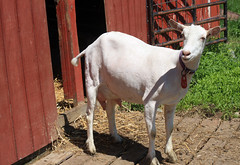
Boers had higher egg counts post-weaning
Kentucky State University started with a grade Boer herd in 2005 and added Spanish (2010) and Savanna (2011) breeds to evaluate breed differences under Kentucky’s environment.  The herds were selected for production and parasite resilience/resistance by culling any doe that did not bring a kid to weaning and number of dewormings a doe received during a 12 month period.

We moved the number of dewormings down over the years from 5 dewormings in 2008, to our current standard of culling any doe that is dewormed 3 times, or more, in a year. We started evaluating parasite loads in the kids at weaning and 60 days post weaning in 2016.

Read full article

Source:  American Consortium for Small Ruminant Parasite Control 

Thursday, September 21, 2017

Next ASI Let's Grow Webinar

The next ASI Let's Grow Webinar is Tuesday, October 3, 2017, at 8 p.m. The title of the webinar is Selection of Replacement Ewes and Culling Underperforming Ewes. The presenter is Susan Schoenian, University of Maryland Sheep & Goat Specialist.

Sound, productive ewes are the foundation of a successful sheep farm. Selection and culling decisions will go a long way towards ensuring profitability.


This webinar is made possible with funding support from the Let’s Grow Committee of the American Sheep Industry Association.

http://www.optimalag.net/sheepagriculture/webinars/replacement-ewe-selection-and-culling-of-underperforming-ewes/

Tuesday, January 24, 2017

Lambing Record Workbooks

Mississippi State University has created Excel spreadsheets for keeping lambing records. There is a general spreadsheet for all sheep and one specifically for hair sheep. There is a different spreadsheet for hair sheep because they have different adjustment factors. In order to properly compare lambs, weaning weights need to be adjusted for sex, type of birth and rearing, and age of dam.

Some other breeds also have different adjustment factors that have been gleaned from National Sheep Improvement Program data. Goats also have different adjustment factors. Without records (and adjustment factors), you may be selecting against reproductive efficiency, if you select the biggest ewe and ram lambs.

The worksheets are Excel spreadsheets, so you'll need Excel to properly run them. Instructions are included in the Excel files.

Download lamb records worksheet
Download hair sheep worksheet

Tuesday, February 2, 2016

Ram Buying Guide

The National Sheep Improvement Program (NSIP) has published a Ram Buying Guide. The guide takes producers though the process of evaluating their current production levels, establishing goals for productivity, and selecting rams using EBVs to help achieve those goals.  EBVs are a much strong selection tool than raw data and centralized testing.

Selecting breeding rams is arguably the most important decision a sheep producer needs to make. After 4 generations, over 90% of the flock’s genetics are contributed by the ram. Therefore, careful consideration needs to go into each breeding decision.

The Ram Buying Guide can be downloaded from the NSIP web site at http://nsip.org/wp-content/uploads/2015/01/NSIP-Ram-Buying-Guide-FINAL-12-21-15.pdf.

Thursday, November 5, 2015

2016 Winter Webinar Series

The University of Maryland Extension Small Ruminant Program will be hosting a webinar series (for small ruminant producers) on consecutive Thursday evenings from February 4 through March 10, 2016. The title of the webinar series (short course) is Special Topics. It will cover a variety of topics and be presented by speakers from several states and institutions.

All webinars will begin at 7 p.m. EST and last for approximately one hour, followed by a question and answer period. Interaction will be via a chat box. Presentations will be recorded and made available for later viewing via Adobe Connect or YouTube. PowerPoint presentations will be uploaded to SlideShare.

Date Topic Speaker Affiliation
Feb 4 Toxic plants Jeff Semler University of Maryland
Feb 11 EBVs for beginners Susan Schoenian University of Maryland
Feb 18 Vitamin and mineral nutrition Dr. Dan Morrical Iowa State University
Feb 25 Sericea lespedeza Dr. Tom Terrill Fort Valley State University
Mar 3 The Big Five Dr. Gareth Bath University of Pretoria (SA)
Mar 10 Natural dewormers Dr. Dahlia O'Brien Virginia State University

Anyone with an internet connection (high speed access recommended) may participate in the live webinars.  Pre-registration is not required. There is no cost involved. Log-in instructions will be provided via a listserv. To subscribe to the webinar listserv, send an email message to listserv@listserv.umd.edu. In the body of the message, write:  subscribe sheepgoatwebinars
Participation is limited to the first 100 people who log-on.

The highlight of the 2016 series will be a presentation by Dr. Gareth Bath from the University of Pretoria in South Africa. Dr. Bath was one of the scientists who developed the FAMACHA© system and Five Point Check©. His presentation will be entitled, The Big Five. He will discuss the five important aspects of internal parasite control:  animals, parasites, pasture, monitoring, and treatment. Because of the time difference involved, Dr. Bath's presentation will not be at 7 p.m. EST.

The University of Maryland Extension Small Ruminant Program has been doing webinar short courses since 2011. The webinars have covered various aspects of sheep and goat production:  nutrition, management, breeding, health, and pasture. Links to these webinars are available at http://www.sheepandgoat.com/#!webinars/cu81.

Download program flyer

Monday, June 17, 2013

Gene Discovery Leads to New OPP Test

A new test is available to help sheep producers identify animals at high risk for ovine progressive pneumonia (OPP), thanks to U.S. Department of Agriculture (USDA) scientists.

An incurable, wasting disease, OPP affects millions of sheep worldwide. Infected sheep are less productive and have fewer lambs. In addition to pneumonia, animals show signs of lameness and "hard bag" syndrome, which causes udders to become hard and produce little milk.

CAE (in goats) and OPP in sheep are very similar.
Agricultural Research Service (ARS) scientists at the Roman L. Hruska U.S. Meat Animal Research Center (USMARC) in Clay Center, NE, found that the gene TMEM154 affects susceptibility to OPP virus infection in sheep. Working with researchers at other ARS laboratories and a commercial company, they developed a commercially available genetic test.

Producers can use the test to detect sheep that are genetically less susceptible to OPP virus, decrease the risk of animals becoming infected, and select breeding stock with low-risk genetic factors, thereby reducing the prevalence of the virus in flocks.

Read more about this research in the May/June 2013 issue of Agricultural Research magazine.

Source: USDA ARS News & Events, June 17, 2013.

Tuesday, April 2, 2013

Awassi genetics now available in U.S.

Awassi genetics are now available in the U.S. and for possible export to Canada.  Paolo Losecco, a business man from Illinois, imported Awassi genetics from a breeder in New South Wales, Australia, and partnered with Larry Meisegeier of River Ridge Stock Farm in Bruce, Wisconsin, to produce and make these genetics available.

Awassi lambs
In the fall of 2012, 8 ewes were implanted with Awassi embryos and 52 ewes were artificially inseminated with Awassi semen. Lambs were born in March with more to be born in April. The first offering of F1 Awassi infused ram lambs will be made in June 2013.

The Awassi breed originated in the arid desert regions of the Middle East. It is an extremely hardy breed that is used for milk, meat, and wool production. The improved Awassi is one of the highest milk-producing sheep in the world.

For the North American dairy sheep industry, the Awassi offers some much needed “new blood” in a very small gene pool.  For the U.S. commercial sheep industry, the Awassi offers the fat tail characteristics for those producers wanting to take advantage of certain ethnic markets.

For more information, please contact Larry Meisegeier at rrsf@brucetel.net or (715) 563-2391.

Friday, March 29, 2013

Southwest Virginia Ram Test

Last year, Virginia Tech conducted a very successful hair sheep ram test at its Southwest Research & Education Center in Glade Springs, Virginia. Thirty of the top-performing rams sold for an average of $883.

This year, the Southwest AREC test will be open to any breed of ram that is registered or recorded with a breed association. Consignments are due May 10. Rams must be delivered to the test site on June 4. An individual consigner may consign up to 10 rams and sell half. The test capacity is 100.

The rams will have a three week acclimation period, after which time they will be tested for 70 days. Rams will have continuous access to high quality fescue-based pasture. They will be supplemented with a concentrate ration at a rate of 3 percent of their body weight. At the start of the test, the rams will be administered a controlled dose of parasites.

Eligible rams need to have been born between January 1 and March 15, 2013. They should be acclimated to feed, but not fed for high rates of gain prior to the test. They should have had prior exposure to internal parasites.

A sale and field day will be held Saturday, September 21 at the Southwest AREC.

Questions should be directed to Dr. Scott Greiner at (540) 231-9159 or sgreiner@vt.edu or Lee Wright at (276) 944-2200 or lrite@vt.edu.

http://www.apsc.vt.edu/extension/sheep/swarec-ram-program/

Thursday, February 28, 2013

Do you remember Dolly?

Dolly died ten years ago (on February 14, 2003, to be precise). Dolly was the first cloned animal  in history, the first to be cloned from an adult cell rather than an embryo.

Dolly
To produce Dolly, scientists used the nucleus of an udder cell from a six year old Finn x Dorset ewe. After "re-programming" it, they injected the nucleus into an unfertilized egg  which had had its nucleus removed. The unfertilized egg came from a Scottish Blackface ewe.

After fusing the nucleus with the egg and "culturing" it, they implanted the resulting embryo into another Scottish Blackface ewe, Dolly's surrogate mother. Dolly was born on February 23, 1997, at the Roslin Institute in Scotland.

Dolly was a normal sheep. Over her lifetime, she gave birth to six lambs. Dolly was euthanized when she was six and a half years old. She was suffering from arthritis and a lung ailment. Some scientists speculate that Dolly suffered from premature aging.

Dolly's remains are on display at the National Museum of Scotland. She is long gone, but her creation ushered in a new era in science.

Wednesday, January 30, 2013

Production traits of dairy goats

Researchers analyzed records from six pure breeds of dairy goats to determine genetic parameters and changes over time in various production and reproductive traits. Three kidding periods were examined:  1976-1984, 1985-1994, and 1995-2005.

Saanens  had the highest milk yield.
Saanens had the highest milk (2339-2496 lbs.) and protein yields. Nubians had the highest fat yields and lowest milk yields (1740-1872 lbs). Oberhaslis had the lowest fat and protein yields. Alpines showed the largest increase in milk yield over time (7.4%).

Sannens were the oldest at first kidding (509-589 d). Toggenburgs and LaManchas were usually the youngest (435-545 d). Kidding intervals were usually shorter for Oberhaslis, LaManchas, and Nubians (350-377 d) than for Toggenburgs, Alpines, and Saanens (373-387 d).

Heritability estimates across breeds were determined.


The researchers concluded that genetic selection within breed is feasible for production and reproduction traits of U.S. dairy goats.

Source:  Journal of Dairy Science, 2012.  Read full article.

Friday, January 18, 2013

Congenital Entropion in Lambs

Entropion is a medical condition in which the eyelid (usually lower) folds inward. It causes irritation and abrasion of the cornea. Entropion occurs in all breeds of sheep and goats. It is transmitted genetically and may also have environmental influences.

ScienceDirect images
Belgian scientists recently investigated congenital (present from birth) entropion in a flock of purebred and crossbred Texel and Ile de France sheep. Fifty-two lambs were affected. They were monitored from birth until a complete recovery occurred. Ocular examinations were performed and clinical signs were scored.

Gender had no effect on the occurrence of entropion, but triplet, crossbred, and Ile de France lambs had a higher incidence. The median time after which eyes with entropion recovered spontaneously was 7 days (range 2–42 days). No significant differences were found between groups regarding average daily gain.

The researchers concluded that the occurrence of entropion was affected by litter size and breed, but that the condition did not affect growth and resolved spontaneously.

Source:  Small Ruminant Research. January 2013 (in press).

Read abstract at ScienceDirect.com

Friday, December 28, 2012

2013 Winter Webinar Series

The University of Maryland Small Ruminant Extension Program will hold a Winter Webinar Series on consecutive Tuesday nights in January and February 2013. The title of this year's winter webinar series is "Breeding Better Sheep & Goats."  The series will focus on how to make genetic improvement in sheep flocks and goat herds, regardless of production emphasis.
  1. January 22 - Genetics 101
  2. January 29 - Breeding systems
  3. February 5 - Selection
  4. February 12 - Performance Evaluation
  5. February 19 - Advanced Genetic Improvement
All webinars will start at 7 p.m. EST and last for approximately 1 hour. Pre-registration is not necessary. The webinars are open to the first 100 people who enter (as a guest) at https://connect.moo.umd.edu/sschoen. After providing a log on name, please indicate where you are from, e.g. John Doe (Harford County)

Anyone with a connection to the internet can participate in one or more of the webinars.  High speed access is recommended. Interaction is via a chat box. The primary instructor for the webinars will be Susan Schoenian, Extension Sheep & Goat Specialist. All of the webinars will be recorded and available for future viewing. The PowerPoint presentations that accompany each webinar may also be downloaded.

Anyone who participates in the webinars is asked to subscribe to the webinar listserv. The listserv will be used to communicate with webinar participants, as well as provide information about upcoming webinars (related to sheep and goat production).

If you have participated in previous University of Maryland Small Ruminant webinars, you may already be on the listserv. To subscribe to the webinar listserv, send an e-mail to listserv@listserv.umd.edu. In the body of the message, write subscribe sheepgoatwebinars.

For more information, contact Susan Schoenian at (301) 432-2767 x343 or sschoen@umd.edu. 

Url for webinars:  https://connect.moo.umd.edu/sschoen/
Recordings of past webinars:  http://www.sheepandgoat.com/recordings.html

Download program flyer

Thursday, December 20, 2012

Subjective vs. objective

In South Africa, genetic improvement in Dorper sheep is based mainly on subjective assessment in the show ring. Information is limited about the genetic relationship between subjectively-assessed and objectively-measured traits, so researchers sought to establish genetic parameters and relationships among these traits.

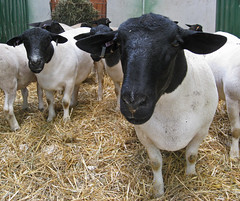
Dorper sheep
Single-trait analysis showed live weight and growth traits to be moderately to highly-heritable, ranging from 0.18 +0.04 for post-weaning weight to 0.54 +0.15 for yearling weight. Multi-trait analysis showed weaning weight and average-daily-gain weaning to be of moderate heritability, 0.30 +0.03 and 0.27 +0.03, respectively. Maternal effects were significant, but of low magnitude.

Single and multi-trait analysis determined the heritability of subjectively-assessed traits to be fairly low, 0.07 +0.02 for conformation and type and 0.15 +0.03 for size. Five-trait analyses led to the conclusion that there are some moderate to high maternal genetic correlations as well as dam permanent environmental correlations between live weight, growth, size and type.

While subjectively-assessed and objective measured traits had mainly positive genetic correlations, the researchers concluded that more emphasis should be placed on using objectively-measured traits for breed improvement.

Source:  Small Ruminant Research. January 2013.

Read abstract at ScienceDirect.com

Wednesday, May 16, 2012

Scientists clone rare Himalayan goat

Scientists have cloned a rare Himalayan goat in Indian-controlled Kashmir, in a bid to increase numbers of the animal, famed for their silky soft undercoats.

The first clone, a female kid called "Noori," meaning "light" in Arabic, could spark breeding programs across the region and mass production of the high-priced wool, Dr Riaz Ahmad Shah, a veterinarian in the Animal Biotechnology Center of Sher-i-Kashmir University, said.

"Noori"  (Image link)

Shah and six other scientists took two years to clone Noori, using the relatively new "handmade" cloning technique involving only a microscope and a steady hand.

Eventually, Shah hopes to clone threatened species such as the critically endangered Kashmir stag, or hangul, the only surviving species of Asian red deer.

Read full Telegraph article.

Monday, May 14, 2012

DNA Test for OPP

The U.S. Meat Animal Research Center (USMARC) in Clay Center, Nebraska, has discovered a gene (TMEM154) that affects susceptibility to OPP infection. There are three major variants of the gene, called haplotypes 1, 2, and 3.  In more than 8000 sheep tested, 97 percent had some combination of these three haplotypes.

Haplotypes 2 and 3 were strongly associated with OPP infection and considered to be "susceptibility alleles." One copy of the haplotype 2 or 3  was needed to increase susceptibility to OPP infection.

In contrast to ewes with one copy of haplotype 2 or 3, those with two copies of haplotype 1  were many times less likely to be infected.  The findings were confirmed with the help of scientists at the Animal Disease Research Unit in Pullman, WA, and the U.S. Sheep Experiment Station in Dubois, ID.

In collaboration with GeneSeek©, USMARC is developing a TMEM154 genotyping test for commercial use. The aim of the test is to correctly determine the TMEM154 haplotypes for each animal tested.  The test is expected to be available  to producers in May 2012. As research continues, genetic guidelines  for reducing the incidence of OPP infection will evolve.

OPP-infected ewes are 20% less productive (USMARC).

Ovine progressive pneumonia (OPP)  causes an incurable, slow-acting, wasting disease that affects millions of sheep worldwide. The disease affects multiple tissues, including those of the respiratory and central nervous system.

In North America, OPP is one of the most costly diseases affecting sheep due to decreased productivity, "hard bag", lameness, and early culling of ewes. Once infected, sheep are carriers throughout life. 

Source:  Research on genetic susceptibility to ovine progressive pneumonia at the USDA Meat Animal Research Center (USMARC), Clay Center, Nebraska

Editor's note:  CAE (caprine arthritic encephalitis) is a similar lentivirus that affects goats. Cross infection is possible.

Friday, April 27, 2012

Sire and dam: who determines what?

Many sheep and goat producers are quick to credit their ram or buck when they have a significant number of multiple births (twins and triplets) born.  But, they are giving credit to the wrong animal.

The dam determines the maximum number of offspring that can be born via her ovulation rate. If she only ovulates one egg, there's not much the male can do to turn that single ovulation into twins, although sometimes a fertilized embryo will split, resulting in the birth of identical twins.

The female (dam) determines the number of offspring.

One way the male may contribute to the incidence of multiple births is through the viability of the conceptus (embryo).  Research has identified differences in embryo survival among different sire lines. Thus, females bred to a male with high embryo survival will give birth to more offspring than females bred to a male with low embryo survival (all other factors being equal).

What the male does determine is the sex of the offspring. Females have two of the same kind of sex chromosomes (XX), whereas males have two distinct sex chromosomes (XY). Whichever sex chromosome the male contributes will determine the genetic sex of the offspring:  XX (female) or XY (male).

The male (sire) determines the sex of the offspring.

At the same time, there are various maternal factors that can affect the sex ratio of offspring.  The "default" sex is female. Theories suggest that females in better body condition will produce more male offspring and that wild animals can adapt the sex ratio to enhance survival of their species.

While reproduction is complicated, for the most part, the female determines the number of offspring and the male determines the sex of the offspring.

Wednesday, April 25, 2012

Sheep cloned with "good" fat

Chinese scientists have cloned a genetically-modified sheep containing a "good' type of fat that is naturally found in nuts, seeds, fish, and leafy greens and helps to reduce the risk of heart attacks and cardiovascular disease.

"Peng Peng", which has a roundworm fat gene, weighed in at 5.74 kg (12.6 lbs.) when it was born on March 26 in a laboratory in China's far western region of Xinjiang.

Peng Peng
Image source: Peng Lui/BGI Ark Biotechnology co.,Ltd/Handout , Reuters

According to the lead scientist, Peng Peng  is growing very well and is very healthy like a normal sheep.

Read full article at Science on MSNBC.com

Tuesday, March 6, 2012

Goat Health Webinar

Dr. Joan Dean Rowe presented an educational webinar on goat health on January 23, 2012. She discussed the importance of testing for and strategies to manage herd diseases such as Caseous Lymphadenitis (CL), Caprine Arthritis Encephalitis Virus (CAEV) and Mycoplasma.

Dr. Rowe is an associate professor in the Department of Population Health and Reproduction at University of California, Davis School of Veterinary Medicine.

Visit the following web site for details on how to view the webinar and for supporting handouts that you can download:

http://fyi.uwex.edu/wisheepandgoat/2012/01/17/goat-health-webinar-january-23/

The webinar was sponsored by the University of Wisconsin.

Tuesday, November 1, 2011

Body condition scoring goats

Langston University (Oklahoma) has created several resources to teach goat producers how to body condition score their goats. 

The resources include a new video and fact sheet and a quick reference card. The resources are available at http://www2.luresext.edu/goats/research/bcshowto.html. The fact sheet is a large PDF file (11 meg).

Body condition scoring (BCS) is a simple, fast method of assessing the overall condition, or the thinness or fatness, of goats.

It provides an indication of available fat reserves that can be used by the animal in periods of high energy demand, stress, or suboptimal nutrition and allows producers to make better management decisions. Goats should be maintained with a moderate amount of body condition.

Download fact sheet
View YouTube video